Loading
No audio | T1 ToneMatch™ audio engine
t1-tonematch™-audio-engine
T1 ToneMatch™ audio engineSold from 2007 - 2018

No audio | T1 ToneMatch™ audio engine

Be sure the system is set up properly and all connections are secure.

A connection may have come loose or may be connected incorrectly. For more info, see Setting up your product.

Be sure the other device is set up properly.

For information on setting up the other device properly, refer to the manufacturer's owners guide.

Be sure the channel is not muted.

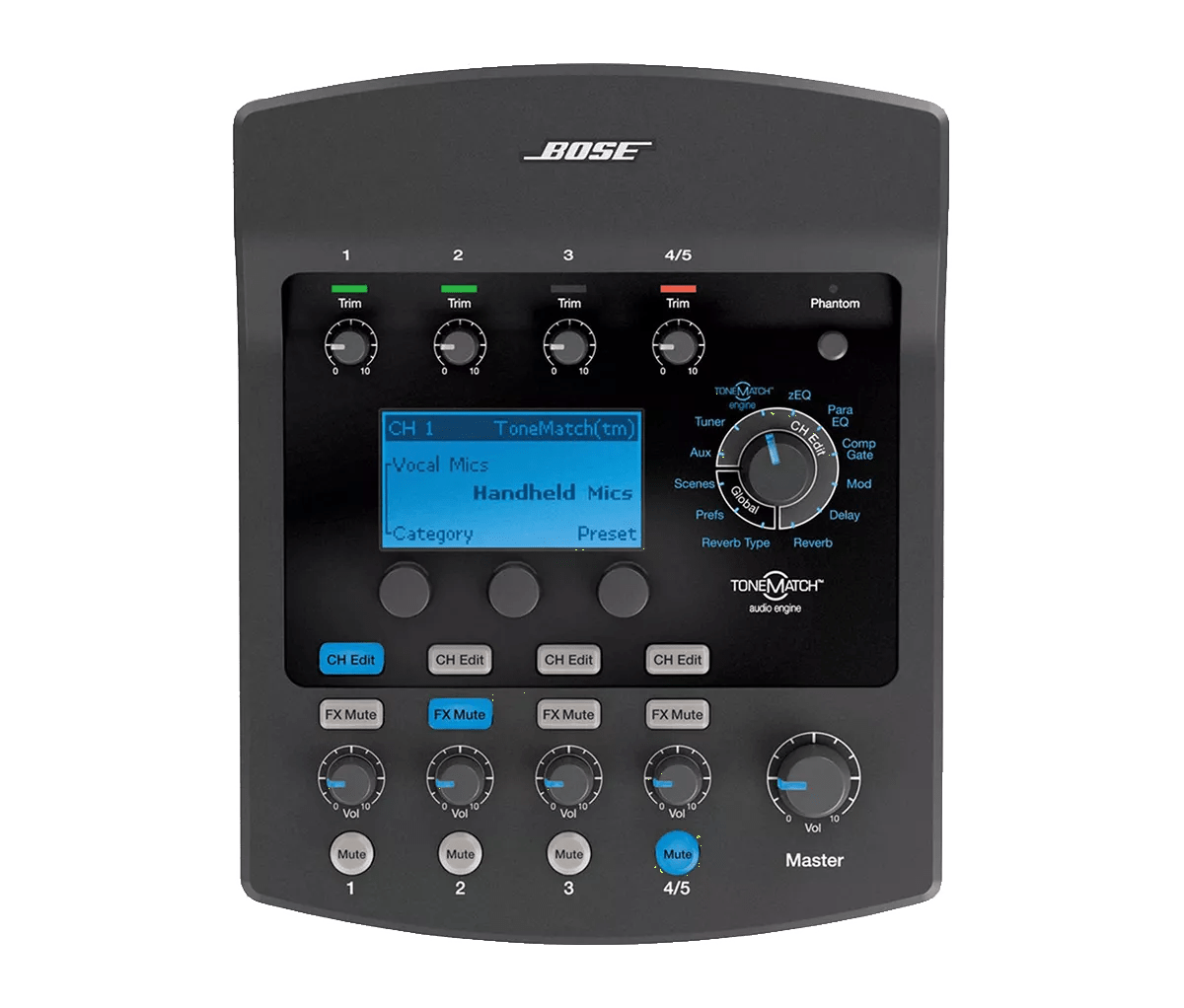
If the Mute button is blue, the channel is muted. Press the button to unmute the channel.

Check the volume level of the Bose system.

Be sure the system volume is not turned down. Using the volume control, gradually increase the volume level.

Be sure the levels are set properly.

If levels are not set properly, performance will suffer. Follow these guidelines when setting levels:
  • Check the signal LED to be sure the input trim level is sufficiently set. The LED should be solid green, indicating a strong signal
  • If the LED is not solid green, increase the input trim level, stopping before the LED is red
  • When the input trim level is correct, increase channel volume and master volume to the desired levels

Be sure the input is assigned properly.

It is possible that the USB input is assigned to the incorrect channels. For information on assigning the USB input, see Assigning USB inputs.

Reset your product.

Much like rebooting a smartphone, your product might need to be reset on occasion to correct minor issues. For more information, see Resetting your product.

Check the input signal of the ToneMatch mixer.

If there is no signal at the inputs, see No audio from product and select the appropriate option. For information on checking input levels, see Checking T1 input and output levels.

Check the output signal of the ToneMatch Mixer

If there is no signal at the outputs, try the following:

Check that the gate setting is not restricting audio.

Rotate the knob on your ToneMatch mixer to Comp/Gate. If gating is enabled, disable it. If the issue is resolved, either turn off gating or reduce its intensity. For more information, see Turning on or off audio gate.

Be sure the levels are set properly.

If levels are not properly set, system performance will suffer. Follow these guidelines:

  • Check the signal LED to ensure the input trim level is sufficient. The LED should be solid green, indicating a strong signal.
  • If the LED is not solid green, increase the input trim level—stop increasing before the LED turns red.
  • Once the input trim is set, adjust the channel volume and master volume to the desired levels.

If using the USB jack, be sure audio is routed properly.

In the system menu, you can select which audio is output through the USB jack. For more information, see Assigning USB outputs.


For information on checking input levels, see Checking T1 input and output levels.

Replace the input cables.

Try different input cables using the same source and same channel. If this solves the problem, the original cables may be defective.

Try connecting to the mixer with a different cable.

If available, connect to the mixer using another cable to determine if the cable is the issue.

Plug in a different audio source.

Connected a different audio source to determine if the issue is related to the source: If audio is being sent to your system from a a microphone, try a different microphone; if an instrument is connected, try a different instrument.

For condenser microphones, turn on phantom power.

Condenser microphones require phantom power to operate. If phantom power is off, turn it on. (Tip: You might hear a pop when phantom power is applied. To avoid a popping sound, turn down the system volume while applying phantom power.)

Plug in to a different input on your product.

Determine if the issue is related to a particular input by connecting the audio source to a different input using the same audio source and cable(s).

Plug in the mixer to a different input on the sound system.

Determine if the sound system input is the issue by connecting the mixer to a different input channel (if available) on your sound system using the same cable(s).

Remove all other USB audio or video devices that are connected.

If any audio or video devices are connected to USB ports on the computer, disconnect them when installing the Bose system to ensure a trouble-free installation.

Try the AUX output jacks on the back of the mixer

In the mixer menu, route audio to the AUX output jacks. For more info, see Assigning inputs to the Aux output. Connect the AUX jacks to your powered speaker and check it sound is heard as expected. If so, the mixer may need to be serviced.

Loading
No audio | T1 ToneMatch™ audio engine